Transference
Conversations about AI-generated images often center around language, for example what a model "understands" from a prompt, how phrasing shapes a picture. But the prompt is only the surface. Beneath it sits a vast interior structure that words never touch: the model's own way of organizing what it has learned to see.
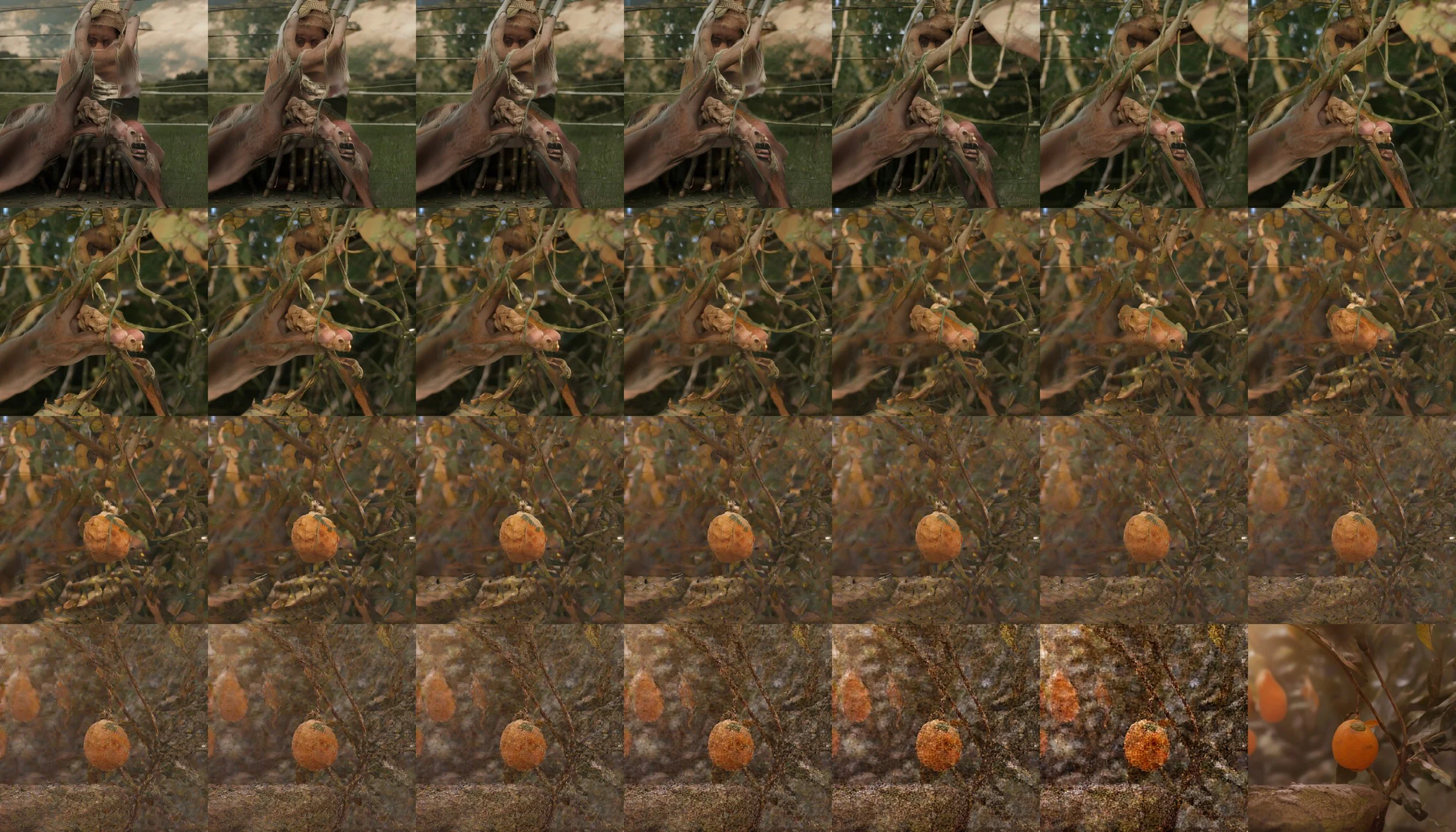
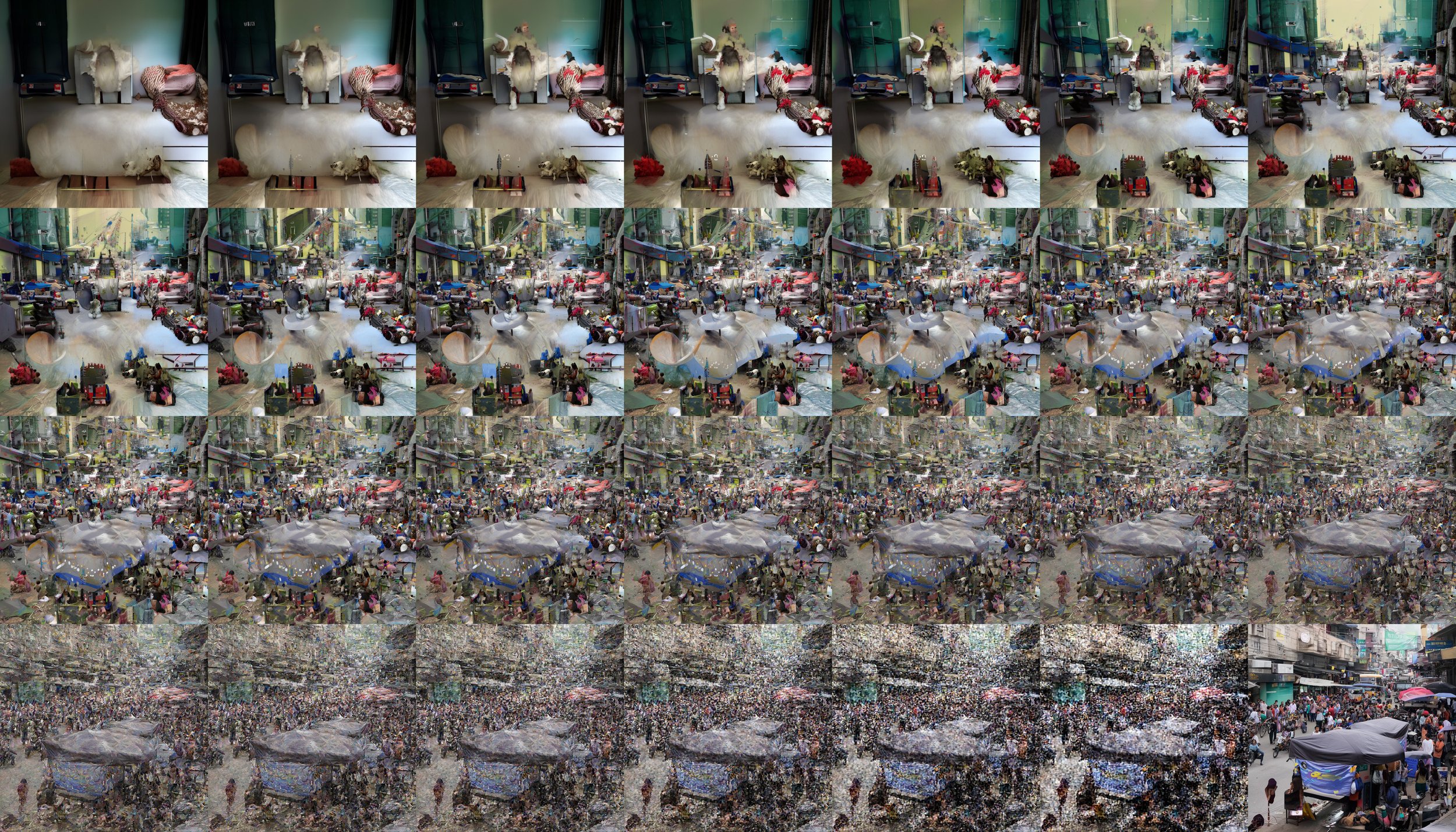
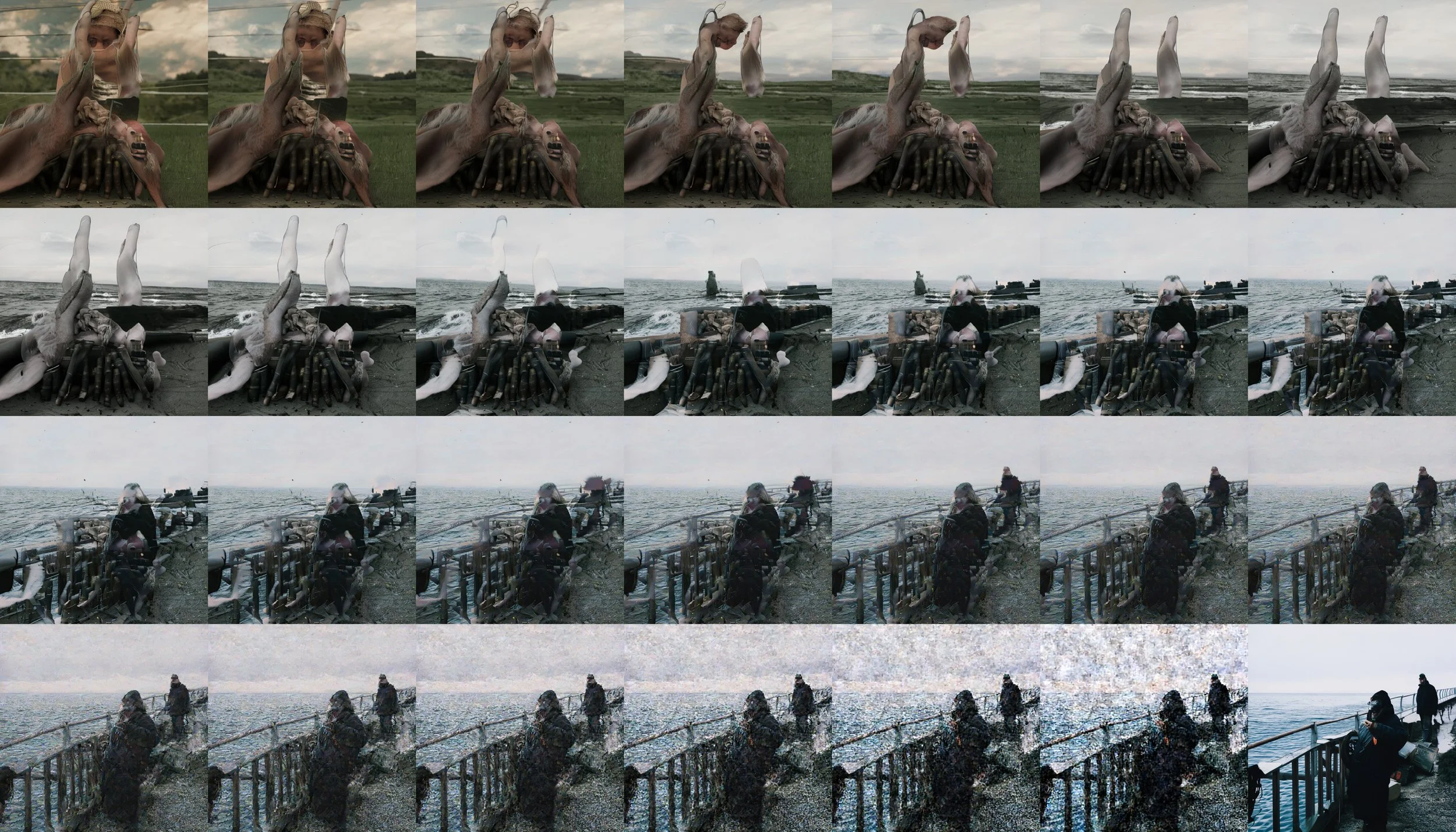
In Transference, one generation receives a prompt, and its activity is recorded at every layer and every step. A second generation, given no prompt of its own, is continually corrected toward that recording. Sometimes it arrives almost where the first one did. Sometimes its own momentum and the borrowed direction pull against each other, and the image comes apart. All of this ran on clusters of NVIDIA H100 GPUs in Modal’s cloud, where recording, mapping, and testing the model’s interior far outweighed the making of any single picture.
Together, the works ask what becomes of an image when the hand guiding it knows nothing, and what becomes of it when that hand knows everything but isn’t the one imagining. What lies past the prompt is not emptiness but an enormous, unnamed vocabulary, and these images might be read as field notes from inside it.